175K Procedures Done · 75+ Years of Combined Experience · Board-Certified Vascular & Interventional Specialists · 7 States
VIS care navigation
Schedule a Consultation
123
VIS Careers
Apply for a Position
Rapid City, SD2 weeks ago
Front Desk Coordinator
Full Time
Front desk opening at our Rapid City, SD clinic: patient check-in, phones, scheduling support, and first-impression patient service.
Omaha2 weeks ago
Lab Registered Nurse
Full Time
Lab RN opening at VIS Omaha: pre/post-procedure care and sedation support alongside physicians and CRNAs. Will train on sedation.
Omaha2 weeks ago
Clinic Registered Nurse
Full Time
Clinic RN opening at VIS Omaha supporting vascular patients: triage, education, procedure coordination, and prior authorizations.
Omaha2 weeks ago
Clinic Medical Assistant
Full Time
Medical Assistant opening at VIS Omaha: rooming, chart prep, procedure-room support, and patient flow.
Omaha2 weeks ago
Lab Technologist (Rad Tech)
Full Time
Radiologic technologist opening at VIS Omaha: circulate and scrub procedural cases and operate imaging equipment in our lab.
Kansas City2 weeks ago
Lab Registered Nurse (Lee’s Summit)
Full Time
Lab Registered Nurse opening at VIS Lee's Summit: pre/post-procedure care and sedation support in our Kansas City-area lab.
Kansas City2 weeks ago
Ultrasound Technologist (RVT/RDCS)
Full Time
The Ultrasound Technologist performs diagnostic vascular studies and supports clinic and procedural workflows across our Kansas City-area locations, including North Kansas City. VIS is a growing, physician-owned cardiovascular practice (not hospital-based), so you get a steady Monday-through-Friday schedule with no call, and real room to grow as we expand. We’re adding to the team.
Fargo2 weeks ago
Lab Technologist (Rad Tech)
Full Time
Radiologic technologist opening at VIS Fargo: circulate and scrub procedural cases and operate imaging equipment in our new lab.
Fargo2 weeks ago
Lab Registered Nurse
Full Time
Lab Registered Nurse opening at VIS Fargo: pre/post-procedure care and sedation support in a brand-new procedure center.
Fargo2 weeks ago
Lab Leader
Full Time
Lead the procedural lab at our new Fargo location: daily schedules, staffing, supplies, and compliance for a physician-owned lab.
Fargo2 weeks ago
Clinic Registered Nurse
Full Time
Clinic RN opening at VIS Fargo supporting vascular patients: triage, education, procedure coordination, and prior authorizations.
Fargo2 weeks ago
Clinic Medical Assistant
Full Time
Medical Assistant opening at VIS Fargo: rooming, chart prep, procedure-room support, and patient flow.
Dakota Dunes2 weeks ago
Lab Registered Nurse
DayFull Time
Join the VIS Dakota Dunes lab as a Registered Nurse supporting minimally invasive vascular and interventional procedures.
Dakota Dunes2 weeks ago
Lab Technologist (Rad Tech)
Full Time
Radiologic technologist opening at VIS Dakota Dunes: circulate and scrub procedural cases and operate imaging equipment in our lab.
Dakota Dunes2 weeks ago
Front Desk Coordinator (Lab)
Full Time
Front desk opening at the VIS Dakota Dunes procedure center: patient check-in, scheduling support, and first-impression patient service.
Dakota Dunes2 weeks ago
Surgical Technologist
Full Time
Surgical Technologist opening at VIS Dakota Dunes: scrub and circulate during minimally invasive vascular and interventional procedures in a physician-owned outpatient lab.
Dakota Dunes2 weeks ago
Procedure Room Assistant / Patient Care Technician
Full Time
Procedure Room Assistant opening at VIS Dakota Dunes: circulate and support minimally invasive vascular and interventional cases, prep and turn over procedure rooms, and assist the clinical team.
Dakota Dunes2 weeks ago
Medical Records Clerk
Full Time
Medical Records Clerk opening at VIS Dakota Dunes: release-of-information, chart accuracy, and health-record management.
Chicagoland2 weeks ago
Lab Technologist (Rad Tech)
Full Time
Radiologic technologist opening at VIS Chicagoland (Wheaton and Crystal Lake): circulate and scrub procedural cases and operate imaging equipment in our lab.
Chicagoland2 weeks ago
Procedural Registered Nurse
Full Time
Procedural RN opening at VIS Chicagoland (Wheaton and Crystal Lake): pre and post-procedure care, sedation support, and recovery observation in our office-based lab.
Black Hills, SD2 weeks ago
Clinic Registered Nurse
Full Time
Clinic RN opening at VIS Black Hills supporting vascular patients: triage, education, procedure coordination, and prior authorizations.
Black Hills, SD2 weeks ago
Clinic Medical Assistant
Full Time
Medical Assistant opening at VIS Black Hills: rooming, chart prep, procedure-room support, and patient flow.
Applying for
Before Your Procedure
Review medications, arrange transportation when required,
follow eating and drinking instructions, and bring
questions to the team.
How imaging and a specialist opinion shape a fibroid treatment plan.
Fibroids are benign growths in the wall of the uterus, and many cause no symptoms at all. When they do, heavy or prolonged bleeding and pelvic pressure are the most common reasons patients seek an evaluation.
Ultrasound is usually the first step, sometimes followed by MRI to map the size, number and position of the fibroids in more detail. That mapping matters because it shapes which treatments are realistic options.
Uterine fibroid embolization is a uterus-sparing, image-guided option that reduces blood flow to the fibroids rather than removing the uterus. Whether it fits depends on the mapping, your symptoms and your plans for the future, which is why the conversation usually includes your gynecologist as well.
Worth bringing to your appointment
Track cycle length, heaviness and any pelvic pressure
Ask whether ultrasound or MRI is the right next step
Discuss your plans for future pregnancy before treatment is chosen
Educational content cannot replace an individual evaluation. Follow the instructions from your own VIS care team.
What BPH symptoms can mean, and where a minimally invasive option fits.
Benign prostatic hyperplasia is common as men age, and it does not always require treatment right away. What usually prompts an evaluation is a change in how the bladder empties: a weaker stream, waking multiple times overnight, or a sense that the bladder is never quite empty.
Evaluation typically starts with a symptom review and prostate imaging, often in coordination with a urologist. From there, the options range from monitoring and medication to procedures, depending on how much the symptoms affect daily life.
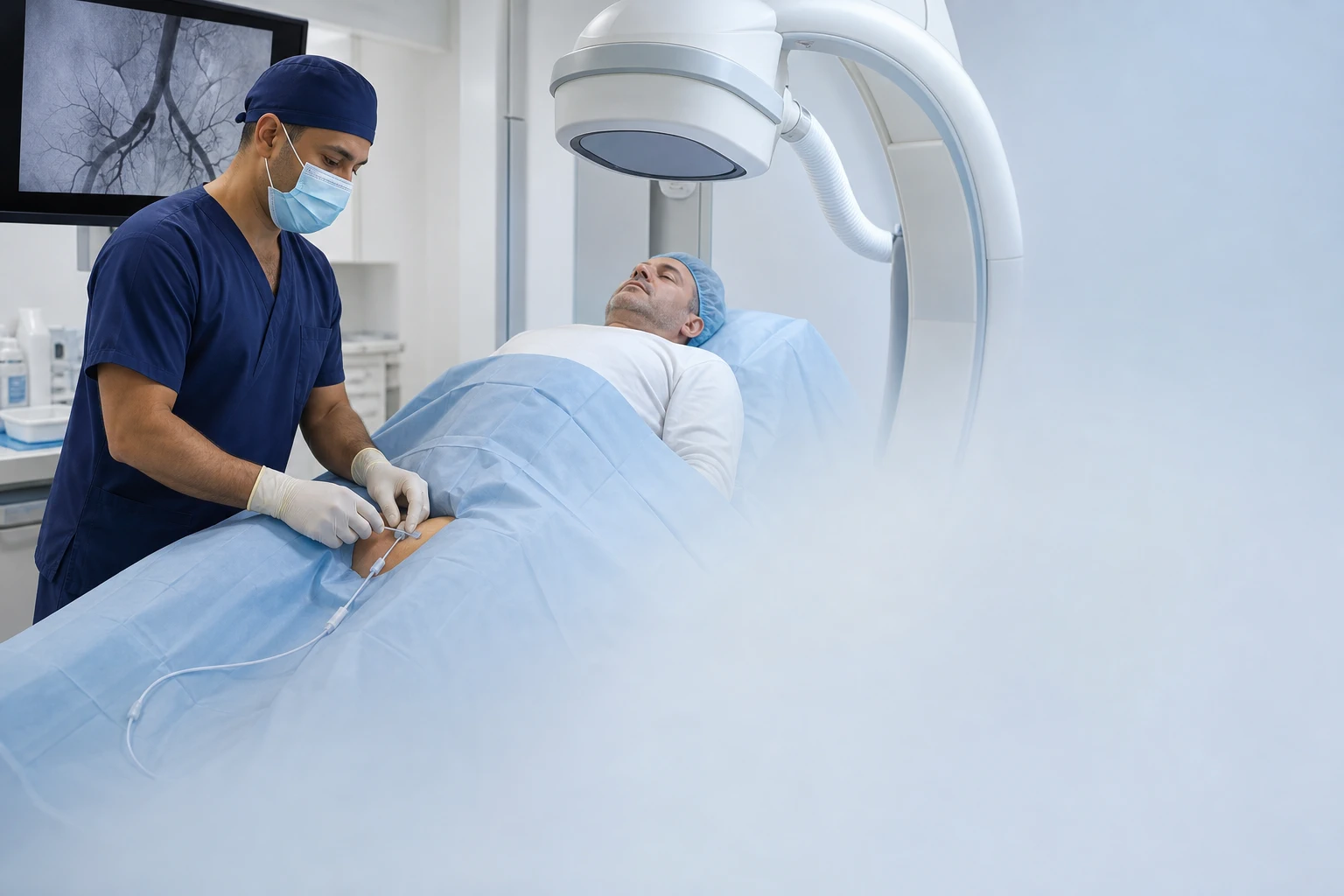
Prostate artery embolization is one image-guided option, performed through a small access point rather than open surgery. It reduces blood flow to the enlarged tissue and is considered alongside, not instead of, a urology evaluation.
Worth bringing to your appointment
Track how often nighttime urination interrupts sleep
Ask whether medication has been tried and how it has helped
Bring a urologist referral or prior prostate imaging if you have one
Educational content cannot replace an individual evaluation. Follow the instructions from your own VIS care team.
What chronic joint inflammation can mean, and where a vascular option fits.
Knee osteoarthritis is usually described as cartilage wear, but the pain itself is often driven by inflammation in the joint lining. In some patients, that inflamed tissue develops an abnormal increase in small blood vessels, which can keep the area irritated even after standard treatments.
This does not replace orthopedic care. It is typically considered after physical therapy, medication or injections have been tried and the pain still limits daily activity, and it is planned alongside your existing orthopedic team rather than instead of it.
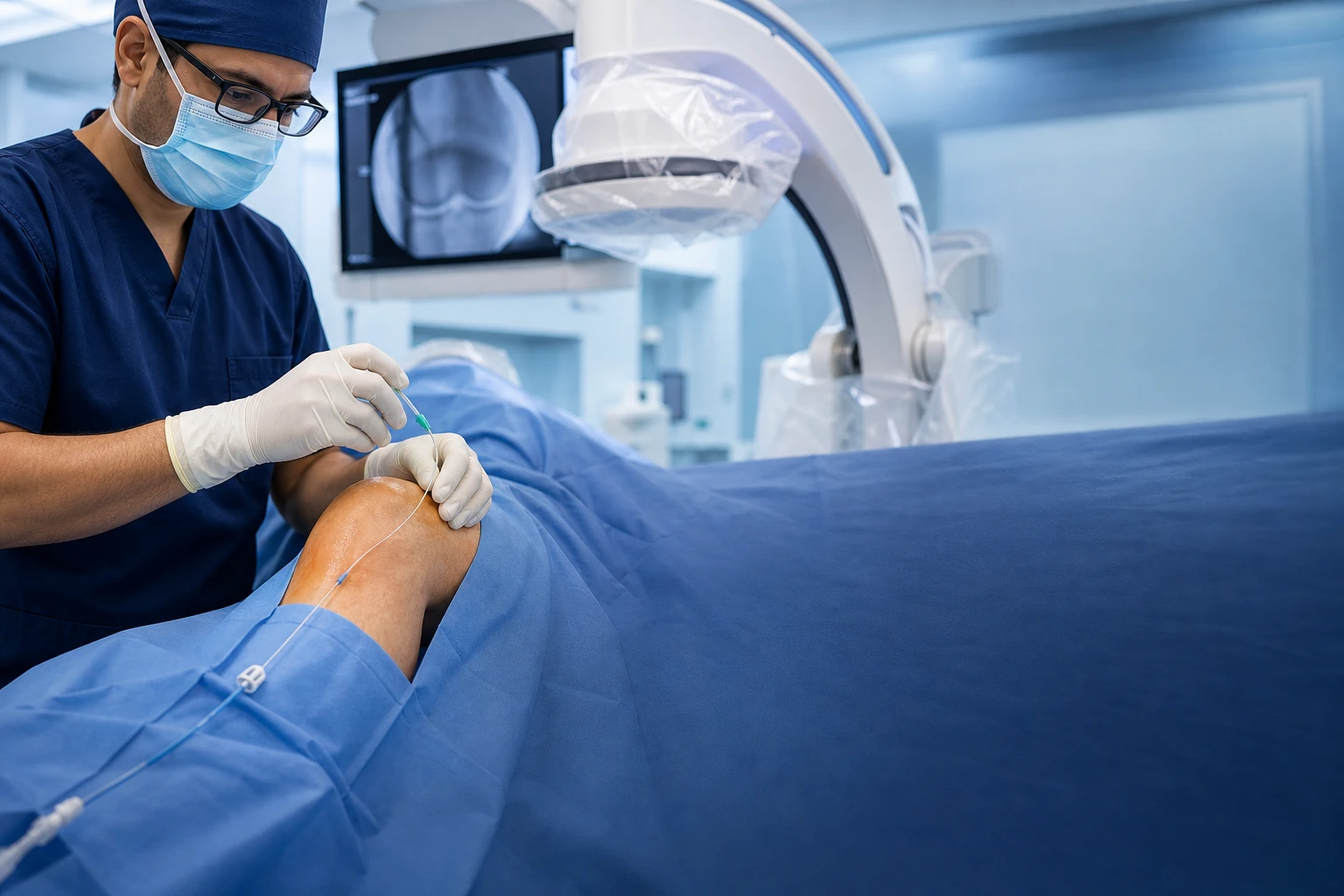
Genicular artery embolization is an image-guided option that reduces that abnormal blood flow. It does not repair cartilage or replace a joint; it is aimed specifically at calming the inflammatory pain some patients experience.
Worth bringing to your appointment
Note whether pain persists despite physical therapy or injections
Bring imaging or notes from your orthopedic visits
Ask whether your pattern of pain fits a vascular option
Educational content cannot replace an individual evaluation. Follow the instructions from your own VIS care team.
A practical checklist for transportation, medications, questions and recovery planning.
Outpatient does not mean unremarkable. Plan the day as though you will need to rest afterward, and arrange a ride home if any sedation is involved.
Bring an accurate medication list, including anything taken occasionally, along with supplements. Blood thinners and diabetes medications often need specific instructions, and those come from your own care team.
Write down who to call and what would count as a reason to call. Knowing that in advance makes the first evening much easier.
Worth bringing to your appointment
Confirm transportation before the day of the procedure
Bring a complete medication and supplement list
Write down the callback number and warning signs
Educational content cannot replace an individual evaluation. Follow the instructions from your own VIS care team.
How venous ultrasound and specialist evaluation shape treatment decisions.
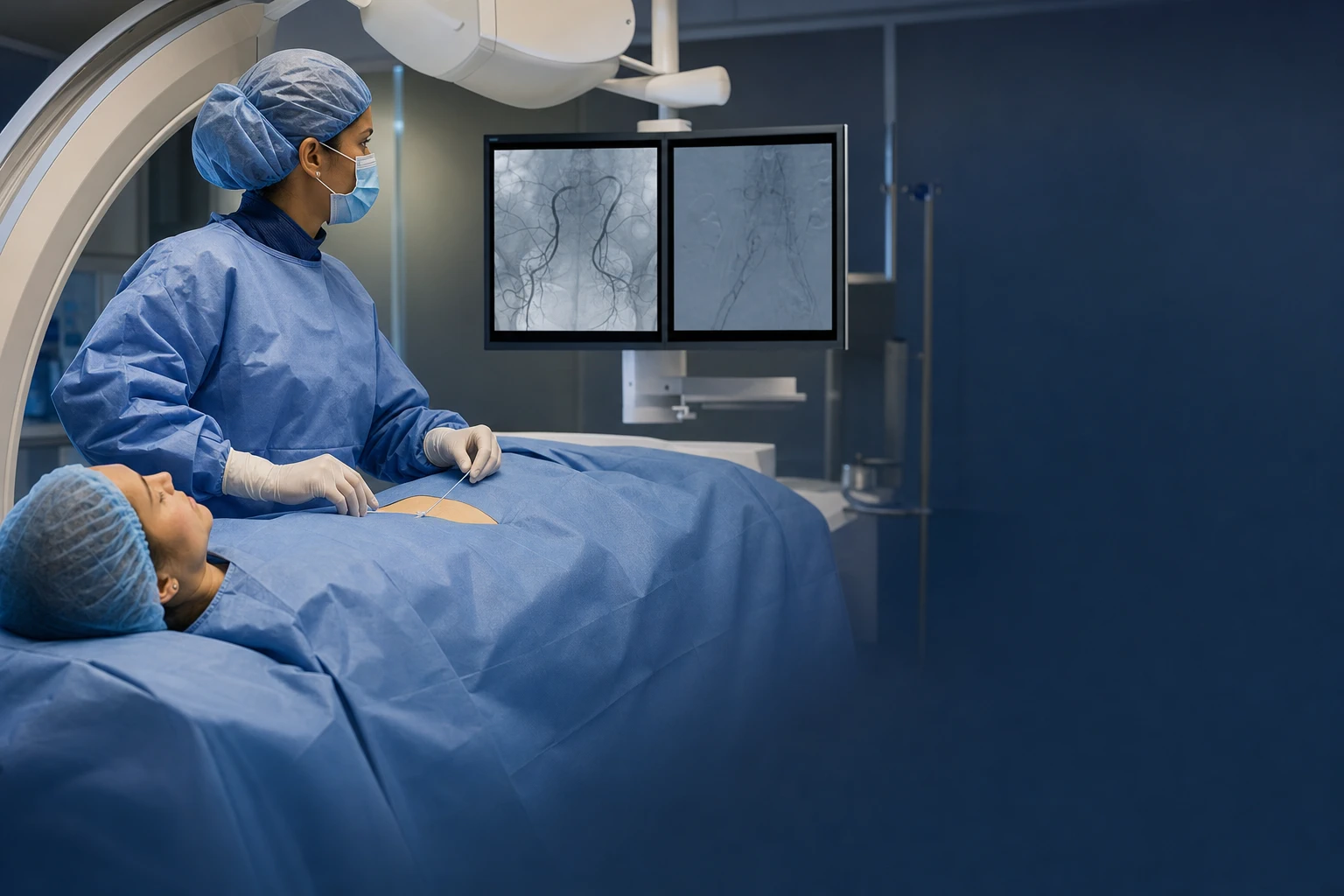
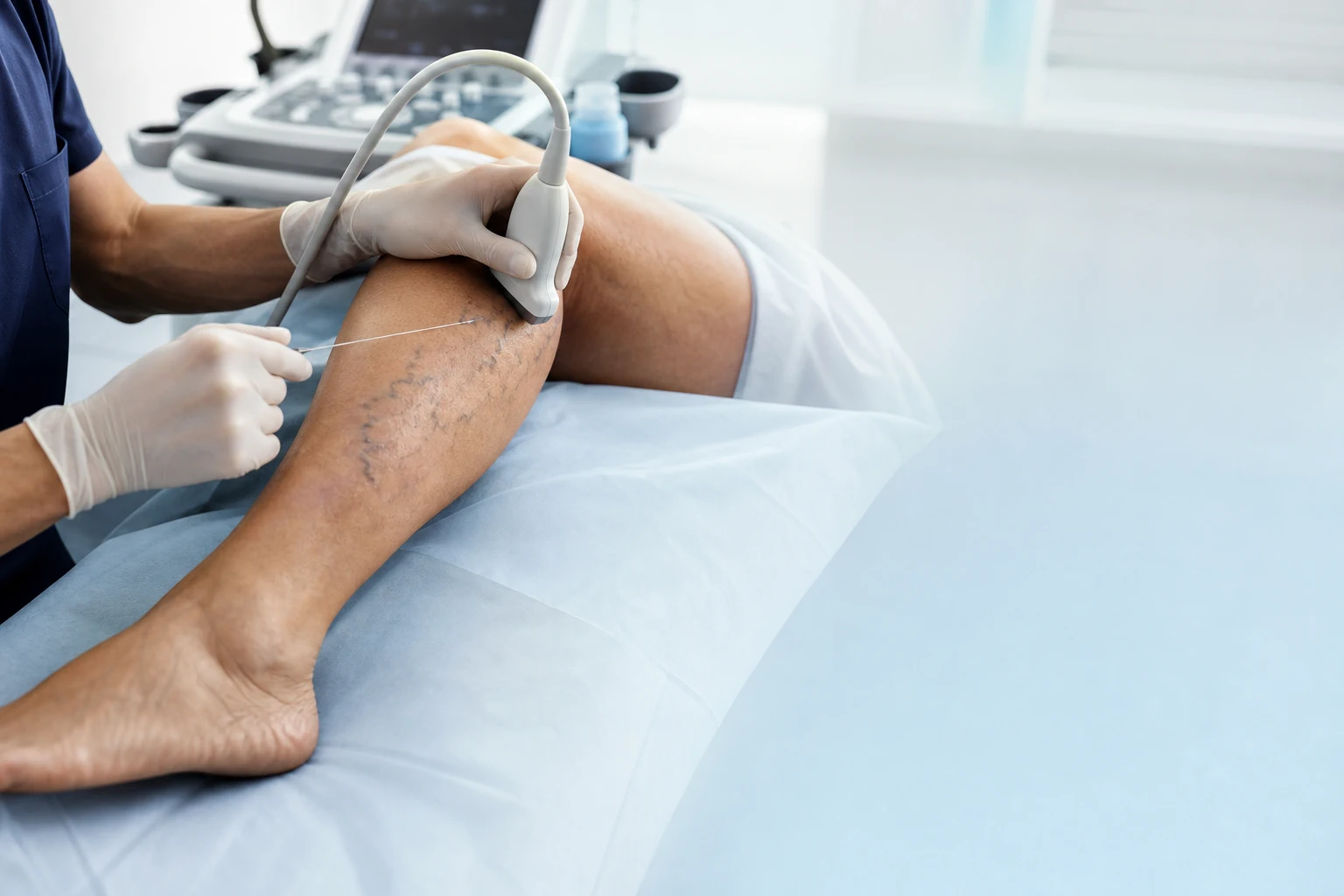
Visible veins are the surface of a deeper question: which vein is allowing blood to travel the wrong direction, and how far back does it start. Duplex ultrasound answers that before any treatment is planned.
Treating the visible vein without addressing the source often leads to recurrence, which is why mapping comes first and cosmetic treatment usually comes last.
Compression, activity and elevation remain part of care even when a procedure is appropriate. Insurance coverage often depends on documenting those steps.
Worth bringing to your appointment
Ask for a duplex ultrasound before treatment is planned
Understand which vein is the source
Expect compression to be part of the plan
Educational content cannot replace an individual evaluation. Follow the instructions from your own VIS care team.
What reduced blood flow can feel like and when to request a vascular evaluation.
Peripheral arterial disease develops when plaque narrows the arteries carrying blood to the legs. Early on, the only sign may be discomfort that appears with walking and disappears with rest.
Because the same arteries elsewhere in the body are often affected, an evaluation usually looks beyond the legs. Blood pressure, cholesterol, blood sugar and smoking history all shape the plan.
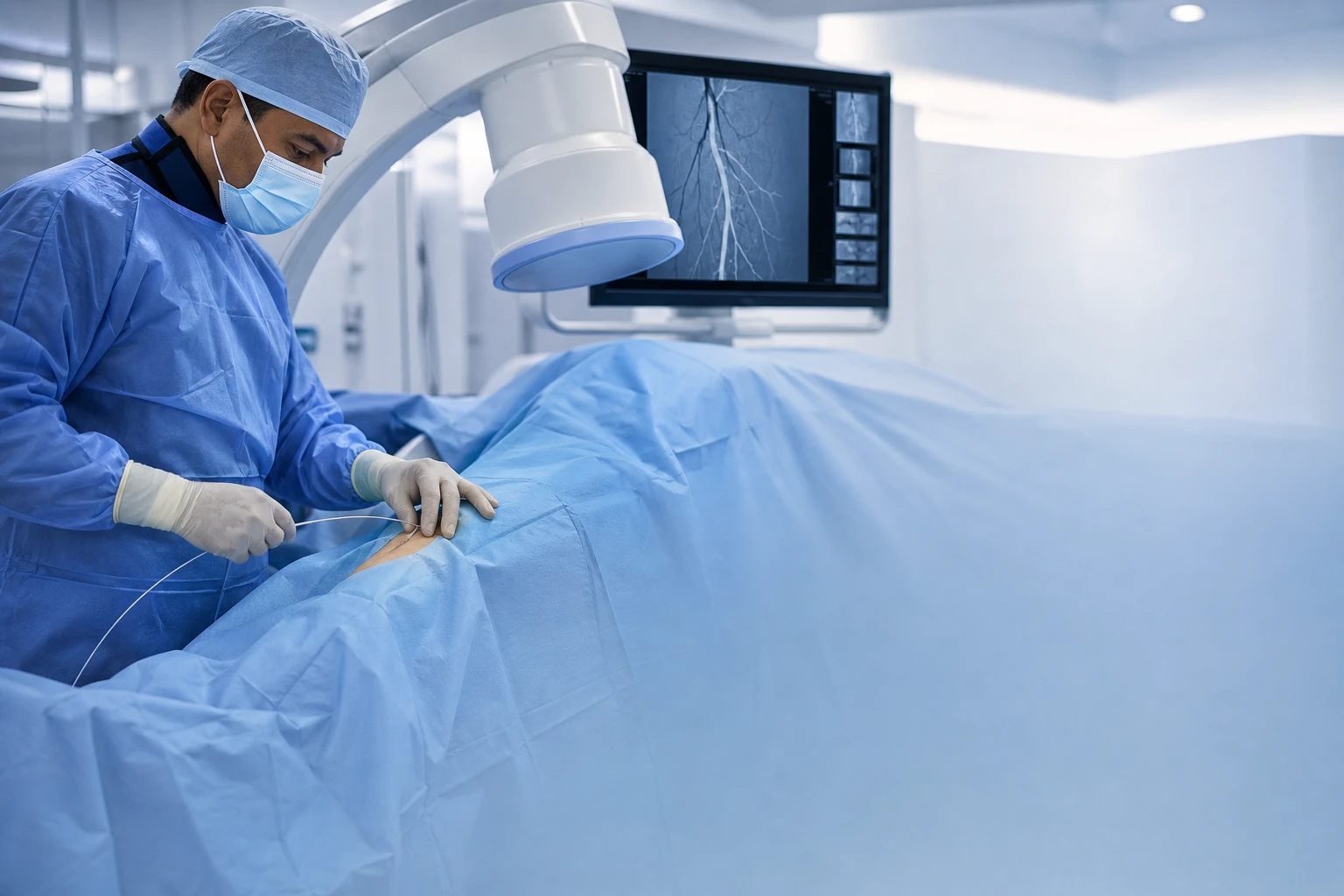
Testing typically begins non-invasively, with an ankle-brachial index and ultrasound. Imaging and catheter-based treatment are considered when symptoms limit daily life or a wound is not healing.
Worth bringing to your appointment
Reduced walking distance is a reason to ask about PAD
A non-healing foot wound deserves prompt evaluation
Risk-factor management is part of the treatment, not an afterthought
Educational content cannot replace an individual evaluation. Follow the instructions from your own VIS care team.
Prepare for a clear conversation with your specialist.
A minimally invasive option is not automatically the right option. The most useful conversation is the one that compares it honestly against the alternatives, including doing nothing for now.
Ask what the imaging actually shows, what the procedure is meant to change, and what would tell your physician it worked. Ask what happens if it does not.
It is reasonable to ask how often the specialist performs the procedure, what recovery looks like for someone with your health history, and who to call afterward if something concerns you.
Worth bringing to your appointment
What does my imaging show?
What are my options, including waiting?
What does recovery look like for me specifically?
Educational content cannot replace an individual evaluation. Follow the instructions from your own VIS care team.
A simple guide to this non-invasive diagnostic exam.
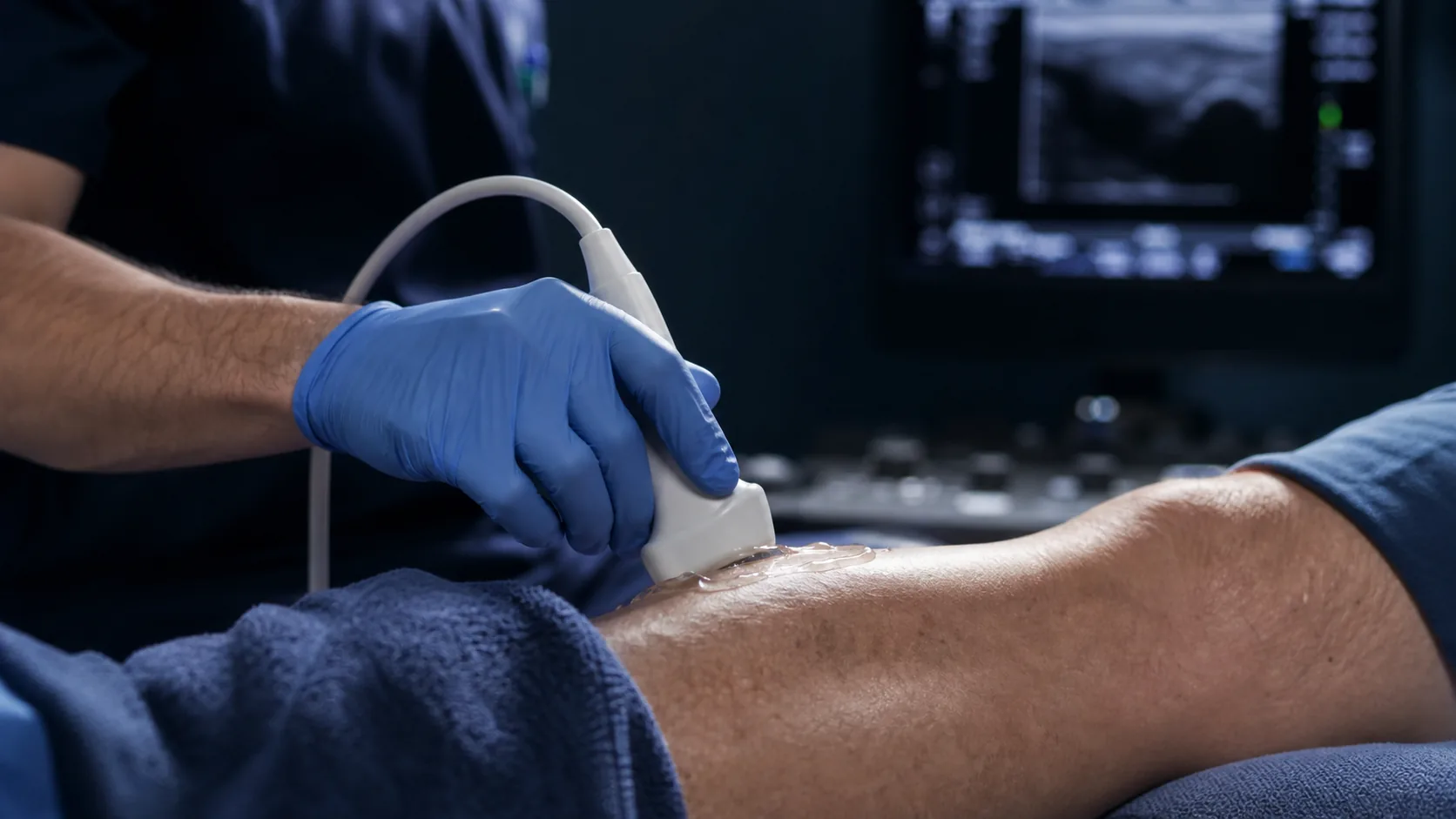
A vascular ultrasound uses sound waves to show how blood moves through a vessel. There is no radiation and no injection. A sonographer applies warm gel and moves a probe along the area being studied.
Some parts of the exam are done lying down and others standing, because vein behaviour changes with position. You may be asked to breathe in a particular way or to tense a muscle so the sonographer can see how the valves respond.
Most studies take between thirty and sixty minutes. A physician reviews the images afterward and discusses what they mean alongside your history and exam.
Worth bringing to your appointment
Wear clothing that allows access to the area being studied
Ask whether to skip caffeine or fast beforehand
Bring prior imaging reports if you have them
Educational content cannot replace an individual evaluation. Follow the instructions from your own VIS care team.
Learn which symptoms deserve a vascular evaluation.
Leg pain is common, and most of it is not vascular. What makes circulation worth investigating is the pattern: discomfort that appears after a predictable walking distance, eases within a few minutes of rest, and returns at roughly the same point the next time.
Venous causes tend to behave differently. Heaviness and swelling that build through the day and improve overnight or with the legs elevated point toward the veins rather than the arteries.
Bring the pattern to the appointment, not just the pain. How far you can walk, what makes it better, whether one leg differs from the other, and whether the skin has changed color are the details that shape the first round of testing.
Worth bringing to your appointment
Note the walking distance where the pain starts
Note whether rest relieves it
Mention any color, temperature or skin change
Educational content cannot replace an individual evaluation. Follow the instructions from your own VIS care team.